Editor's Review:
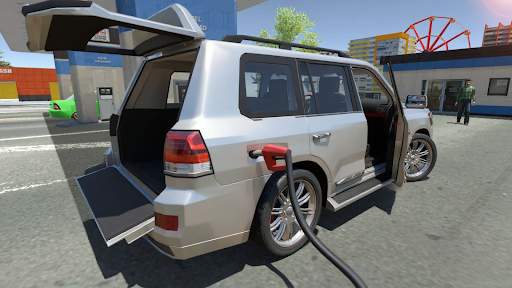
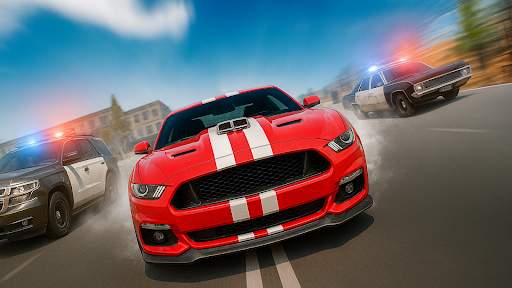
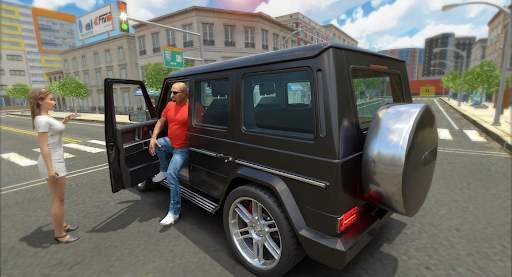
Car Simulator 2 is an open-world driving simulation game that combines free exploration, realistic vehicle handling, car progression, and light life-simulation elements. What truly makes this game so appealing is not simply the fact that it lets you drive, but the way it gradually turns driving into something more than a basic mechanic. It becomes a process of perceiving the world, adjusting yourself, and learning how to move with rhythm. Many mobile driving games treat the car as little more than a vehicle for speed and impact. They focus on acceleration, competition, drifting, overtaking, and a kind of loud, immediate excitement. Car Simulator 2 does not rely entirely on that. What makes it special is that it slowly leads you to realize that driving is not just about getting from one point to another. It is a continuous act of judgment, a way of entering into relationship with your surroundings, and even a way of reconnecting your body, your awareness, and your reactions. One of the game's greatest strengths is that it always has new tricks waiting for you to discover. When you first get into it, you may think its structure is simple: accept missions, drive, earn money, buy better cars. At first, that is true.
But once you really spend time with it, you begin to understand that the real pleasure of the game lies not merely in completing objectives, but in gradually learning the finer details hidden inside each drive. You start noticing that different cars feel completely different when pulling away from a stop. On the same corner, easing off early and gliding through with a clean line feels entirely different from forcing your way around it. You slowly learn how to manage speed more smoothly, how to correct the angle of your car in tight spaces, and how to settle your rhythm as you approach a parking point instead of lunging in impatiently at the last second. Many of these techniques are never explicitly taught by the game. You discover them yourself through repetition, and that is exactly what makes the experience so compelling. It never gives you the sense that you have fully exhausted its depth. In some small adjustment of steering, some clean pass, some precise stop, or some stretch of controlled speed, you suddenly realize there is always a better way to handle it. This is not a game whose entire depth reveals itself in ten minutes. It keeps telling you, through play, that you can still become steadier, subtler, and more understanding. That process of discovering new techniques is not only intellectual. It creates a very physical kind of engagement. You can actually feel the energy in your body being activated. This is not cheap adrenaline, nor the kind of excitement manufactured by exaggerated collisions and cinematic bursts of speed. It is something more grounded, more inward. When you focus on a stretch of road and carefully manage a series of turns, intersections, distances, and speed changes, you begin to feel your fingers, your gaze, your anticipation, and even your breathing taking part in the experience. Your attention settles into each action. Your body is no longer just pressing buttons mechanically; it is cooperating with your judgment to carry out a continuous and meaningful chain of movements. That involvement feels real because the game's feedback is immediate and honest.
The way you drive is exactly the way the car responds. If you are impatient, the car becomes unstable. If you are calm, the entire driving experience becomes smoother. When you are driving well, you feel something very clear: it is not merely the character driving the vehicle. It is you, entering a real driving state. Because of that, the game carries a form of power that is rarely talked about seriously: it can make you feel empowered. And that empowerment does not come from leveling up, collecting money, or buying luxury cars. It comes from something deeper. Little by little, you begin to realize that you are capable of far more precise control, far more stable decision-making, and far more refined timing than you first assumed. What begins as a series of missions slowly becomes an education in coordination. You learn when to speed up, when to hold back, when to leave room for correction, and when you must commit decisively. For perhaps the first time, you feel that your body is not an obstacle to awareness, but one of the ways through which awareness itself becomes meaningful.
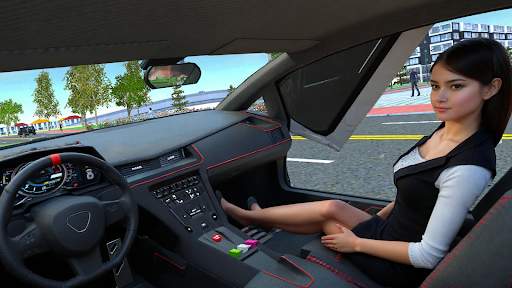
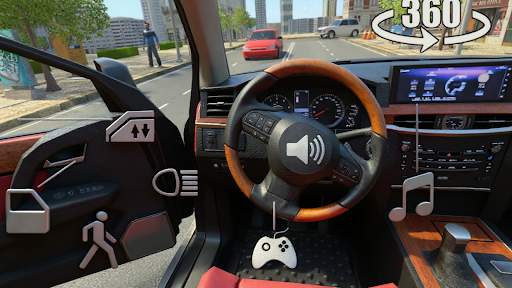
In everyday life, you may experience a painful sense of disconnection. Your body is doing one thing, your mind is somewhere else, actions happen before attention truly arrives, and inner disorder quietly spreads into everything you do. But in the world of Car Simulator 2, that separation begins to shrink. The rules are direct, and the feedback is honest. If you are focused, you drive better. If you are restless, mistakes show up immediately. Through that process, you start to recover a sense of unity that is often missing in ordinary life. Your eyes are watching, your hands are adjusting, your body is following, and your mind is no longer drifting somewhere far away. That feeling of connection can lead to subtle but important realizations. You will realize that steadiness is not dullness, that slowness is not weakness, and that real control does not come from brutal force, but from precision. Seen from that angle, Car Simulator 2 is not just a game about driving. It is also a medium through which you communicate with the world. The world here is not decorative. It responds to you. Intersections, traffic flow, buildings, mission markers, other vehicles, and the open map itself all form a moving order, and you are not crashing into that order from the outside. You are learning how to enter it, move through it, and understand it. The longer you play, the more clearly you feel that you are not simply controlling a system. You are exchanging information with the environment. Red lights signal you to wait. Corners require you to anticipate. Speed forces you to bear consequences. Routes compel you to choose. Every drive feels like a response you offer to the world, and the world answers you immediately with a result.
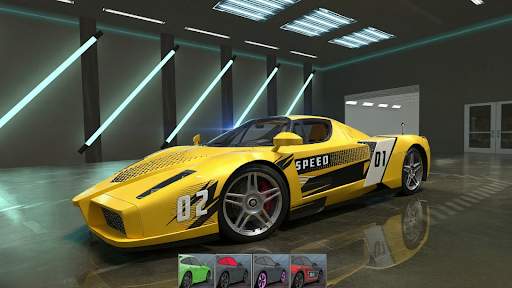
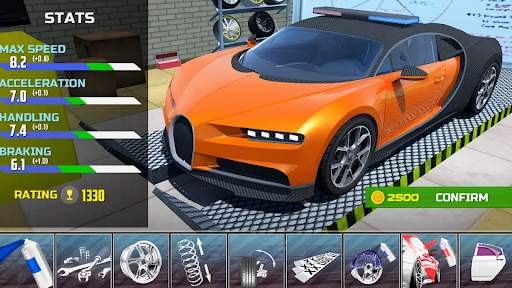
Over time, this interaction creates a strange and beautiful sensation. It is as if you are not just completing tasks on a screen, but using driving itself as a way to speak with the space around you. You start noticing the width of roads, the structure of intersections, the scale of your vehicle, the shifts in perspective, and sometimes, during a smooth and balanced stretch of movement, you feel something rare and lucid: everything is flowing, and you are finding your place within that flow. In terms of structure, the game is not shallow either. It is not built around a single sequence of races. Instead, it ties together an open map, mission systems, vehicle acquisition, customization, economic progression, and the experience of learning multiple cars. That design helps separate it from pure racing games, because it is not only testing whether you win or lose. It is shaping how you move through this driving world. The differences between vehicles are particularly important here. Changing cars does not simply mean changing appearance. It means changing weight, response, and the way you must handle the road. So you cannot rely on one habit to master every car. You have to understand each vehicle's personality.
And perhaps the most valuable thing the game offers is that it lets you see your own potential. Not in some empty emotional sense, but in a way that is specific and proven through your driving experience. You watch yourself, like an outsider, move from awkwardness, impatience, and rough control toward steadiness, clarity, and composure. Roads that once overwhelmed you become manageable. Vehicles that once felt hard to control begin to move with rhythm in your hands. What started as a desire simply to finish a mission gradually transforms into an clear goal to make each movement feel complete and well-shaped. Gradually, you begin to understand that your potential does not hide in those fabulous stunts. It hides in small corrections, steadier choices, and more accurate judgment. Of course, looked at more objectively, the game is not without flaws. Its visuals are not the kind that can rival large console titles, and the density of its city and interactions cannot fully match the richness of a true blockbuster open world. Over time, some mission types do begin to feel repetitive. And during progression, the accumulation of money can occasionally feel a little slow, especially once you set your heart on more expensive vehicles. But these shortcomings do not fundamentally damage the game's core appeal, because Car Simulator 2 was never relying on overwhelming spectacle in the first place. Its value lies in the fact that driving itself always remains meaningful, responsive, and layered. So Car Simulator 2 is not a game that wins you over through noise. What makes it powerful is the way it turns driving into a process of discovering new techniques, awakening your physical awareness, understanding your environment, recognizing your potential, and reconnecting with yourself. It does not merely teach you how to drive better. Through each trip, it slowly brings you closer to a more complete version of yourself!