Editor's Review:
Sniper 3D is a first-person shooter focused on sniper combat, while also combining single player mission progression, multiplayer competition, and an equipment growth system. After playing for a very long time, you feel that the most worthwhile part of this game is not simply that sniping feels satisfying. Many shooting games on the market chase instant excitement and emphasize fast assaults, constant eliminations, and heavy feedback. Sniper 3D certainly has those surface level attractions, but the true strength of this game lies in how it turns sniping from a simple action into an experience shaped by thought. In this world, what you learn is not limited to zooming in, predicting movement, and pulling the trigger. You also learn how to manage your state of mind when facing a difficult situation. Because of this, the longer you play, the less it feels like a game driven only by adrenaline, and the more it feels like long-term training in judgment, patience, adjustment, and willpower. Ernest Hemingway once wrote that, "the world breaks everyone, and afterward, many are strong at the broken places". This line does not feel exaggerated when applied to Sniper 3D, because the pleasure of this game does not come only from successful shots. It also comes from how you deal with failure. At first, you may take it for granted. But after you play for a longer time, you will find that what truly tests you is not shooting skill alone. What matters is whether you can quickly learn from your own mistakes and turn that lesson into steadier choices in the next match.
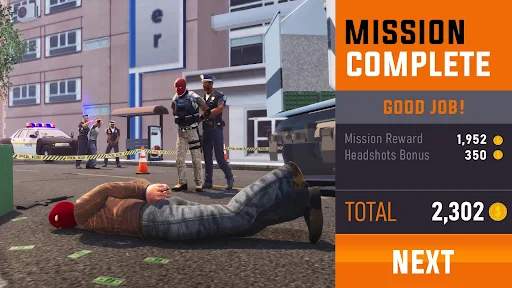
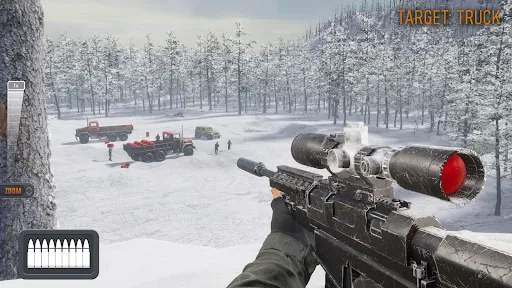
In the single player mode, the mission structure is not especially complicated. Eliminating targets, protecting key characters, and carrying out kills under specific conditions are all familiar forms. What it does well is that these missions do not ask you to mindlessly repeat the same trigger pull. They keep forcing you to improve your judgment. If you choose the wrong target order, the pace falls apart. If you become greedy and chase a double kill, you may miss the enemy who actually matters. If you stay scoped in for too long, the risk of exposure rises. Every failure is concrete and open to review. You do not simply lose. You understand where you lost. In real life, when people run into problems, they often complain first. They complain about the environment, luck, other people, or unfair rules. But in the world of Sniper 3D, once you genuinely want to perform better, you gradually stop complaining, because complaint has no practical value. The only thing worth focusing on is how to solve the problem. If an opponent is holding an uncomfortable angle, then you change your view and wait for the right opening. If your resources are not flowing smoothly, then you rethink the order of your upgrades. If a mission keeps going wrong, then you rebuild your sense of target priority. The greatest strength of this game is that it pulls you away from emotional reaction and back toward problem solving.
This problem-solving mindset is also deeply connected with the rhythm of play. Sniper 3D is not the kind of shooter that encourages constant rushing. Its appeal is based on patience like that of a hunter. The players who truly know how to play are often not the ones who fire the most shots, but the ones who can resist firing the wrong shot. In sniping, speed is less important than stability. It is not enough to see a target and fire. You have to wait for the right second. Very often, the most valuable part of a successful elimination is not the instant of pulling the trigger, but the few seconds before it, when you are observing, filtering, and restraining yourself. You must watch the rhythm of enemy movement, check whether your own position is dangerously exposed, and consider whether another threat will appear after you take the shot. Patience like that of a hunter is not a form of slow hesitation. It is a form of focused self control. Because Sniper 3D creates this feeling of control so well, it becomes more than a simple shooting experience. It becomes a genuine sniping experience. The multiplayer mode pushes this even further. Unlike single player missions, the opponents in player against player combat can think, predict, and take advantage of your mistakes. Once you enter the arena, you are no longer facing a carefully scripted situation. You are facing real players who are also searching for openings. At that point, another deeper value of this game begins to appear. You must learn to stay resilient toward the things beyond your control. Sometimes the equipment of the opponent is simply better than yours. If you spend all your attention on the things beyond your control, your state of mind will only get worse.
But Sniper 3D pushes you toward a more mature response. You slowly realize that real value does not lie in forcing everything into your preferred shape. Real value lies in playing your current situation as well as possible even when conditions are far from ideal. This is the most convincing expression of resilience toward the things beyond your control. You cannot control every match, every weapon gap, or every behavior of your opponent, but you can control the speed of your observation, the length of your exposure, the timing of your scope, the planning of your resources, and the precision of your judgment. You stop asking why this situation happened to you and start asking what the best possible response is within this situation. This change is not some grand lesson written by the system. It is a real ability that gradually grows inside the player after long experience in combat. The most interesting new angle of Sniper 3D is not the number of modes it offers, but the rare way it turns sniping into an experience of accepting reality and using reality well. Life is not a problem to be solved, but a reality to be experienced. That idea fits this game extremely well. Not every match will go smoothly. Not every upgrade will land exactly where you need it most. Not every shot will immediately produce the perfect reward. But that does not mean these problems can only drain you. On the contrary, it teaches you how to extract value from problems. If resources are limited, then you learn to invest with greater precision. If the situation is bad, then you try to make each shot carry more value. You do not sit still and wait for problems to disappear.
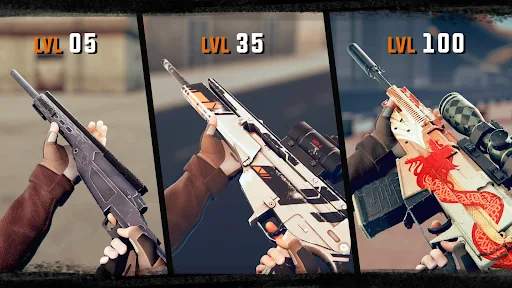
From the perspective of systems, this game still carries familiar traits of mobile design. Weapon upgrades, equipment strengthening, numerical growth, and stages of resource pressure are all clearly present. As you move into the middle and later parts, you become increasingly aware of the pull of the numerical system. Some players will feel that this slows the pace, and that criticism is understandable. But if you look at the whole experience, this growth system is not completely separated from the core of play. Sniping, by its nature, is never a style of combat in which you immediately possess everything. It naturally involves preparation, waiting, accumulation, and choice. You cannot be all powerful from the beginning. You must move forward under limitation, find your own way when you are not yet strong enough, and stay clear headed when growth slows down. There is pressure in this, but in some ways that pressure strengthens the theme of the game. It refuses the fantasy of victory without resistance and instead asks you to sharpen your will within resistance.
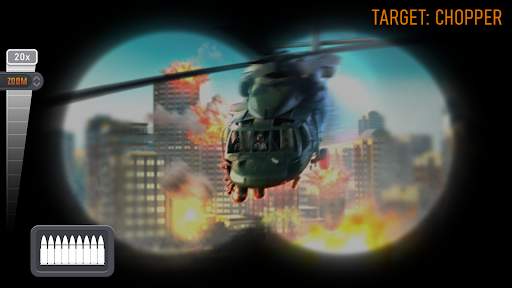
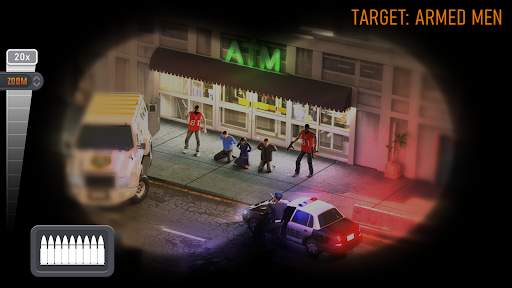
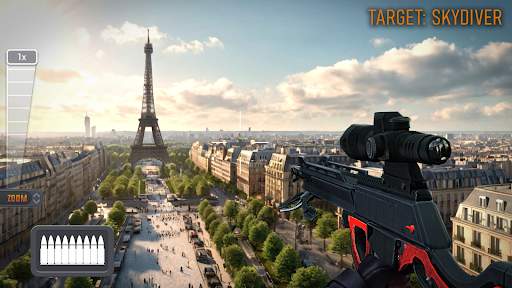
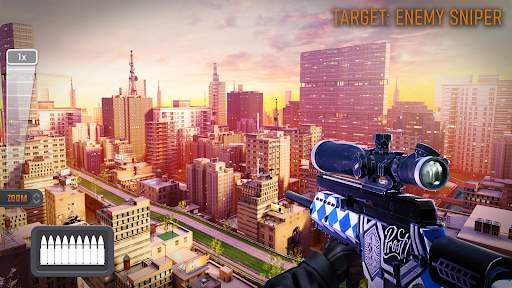
In terms of visuals and sound, Sniper 3D does not chase flashy spectacle. It gives priority to serving play well. The environments are easy to read, the exposure of targets is clear, and the view through the scope is direct. The sound feedback is also effective. Hits and eliminations all carry clear responses that let the player feel the weight of a successful shot. At last, the greatest achievement of this game is that through repeated aiming and firing, it does not only sharpen the accuracy of the player. It also builds a state of mind that is difficult to break. Willpower does not always come from everything going smoothly. Very often it comes from having gone through many difficult matches and still learning how to keep playing. You learn from your own mistakes. You remain patient like a hunter. At the moment when you might instinctively complain in real life, you turn instead toward solving the problem. You also become more able to endure the variables that you cannot control. Rather than denying them, you learn how to find the best response within them. So Sniper 3D is not a sniper shooter supported by one simple form of excitement. It is a game whose structure and character become more visible the longer you play. It has the numerical pressure that mobile progression games often cannot avoid, and it has some repetition that naturally appears in long term live content. Even so, it still builds a rare sense of psychological growth. What deserves the most recognition is not only that it lets you feel the thrill of being a sniper. It also lets you truly learn, through sniping, how to face mistakes, endure limitation, adjust judgment, and produce the best possible result within an imperfect situation. That experience carries far more weight than a simple killing count!