Editor's Review:
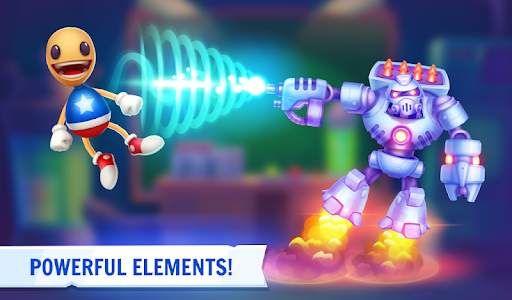
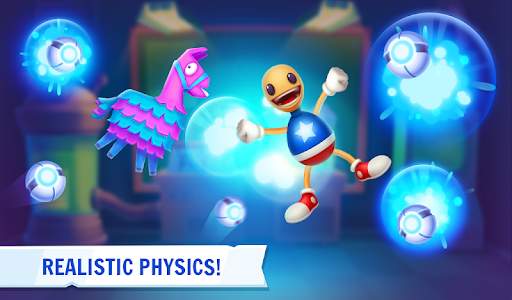
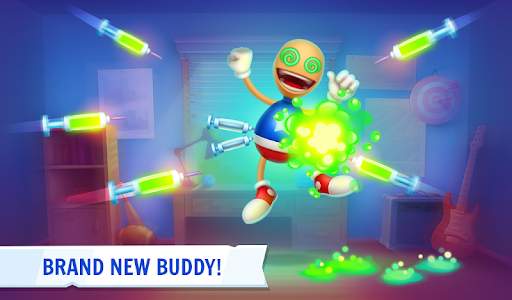
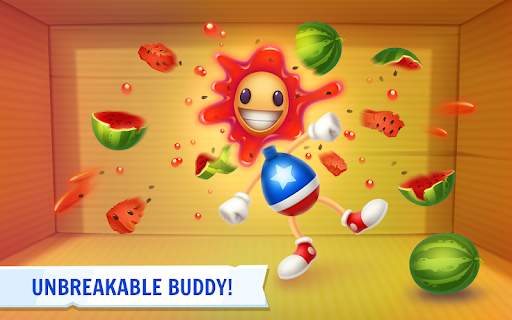
Kick the Buddy: Forever is a casual simulation game that involves physics-based interaction and stress relief. After spending a serious amount of time with Kick the Buddy: Forever, you will feel that it is not the kind of game that can be summed up simply as "something to vent your frustration on." When you play this game for the first time, you find that its structure is extremely simple. You will face a doll-like character named Buddy, uses various weapons, props, and environmental mechanics to interact with him, triggers different animations, sound effects, and scene changes, and gains emotional release and sensory stimulation from the process. But if you only understand it as a repetitive game about "hurting a ragdoll," then you are only seeing its shallowest layer. What truly makes this game interesting is that it turns destruction into a highly controllable, constantly shifting, and even psychologically suggestive and satisfying process of interaction. The value of this game does not lie in whether it is "noble," but in the fact that it provides an extremely low-threshold way of resisting numbness and pressure. It does not try to educate you, nor does it force you to grow, nor demand that you become stronger. It simply gives you a space that is entirely under your control, allowing you to find a little emotional outlet within absurdity.
The game's greatest success is that it almost completely removes the sense of alienation and helplessness that players often feel in many other games. Many mobile games appear rich on the surface, but in reality they constantly remind you that your resources are insufficient, your numbers are insufficient, your level is insufficient, your time is insufficient, so you are always chasing after something. But in Kick the Buddy: Forever, at least at the core of its experience, you do not feel that kind of despair. Buddy will not turn around and oppress you, and the system will not hold you hostage through complicated objectives. The moment you enter the game, you tap once, and he flies away; you switch to another weapon, and his reaction changes accordingly; you pause, resume, or repeat experiments, all at your own discretion. This total sense of "I decide what happens here" will give you a deep sense of satisfaction. Another highlight of this game is that it gives you a nearly pure sense of rebellion. In the real world, people live within rules. Work has procedures, social life has boundaries, expression has consequences, and many emotions cannot truly be released. Kick the Buddy: Forever, however, offers the opposite experience. Outside this stagnant reality, it suddenly gives you a tiny stage of absolute freedom. You do not have to be reasonable, efficient, cautious, or morally presentable. You can pick up a rocket launcher, summon a bizarre contraption, fling Buddy to the edge of the screen and drag him back. These actions are absurd in real life, of course, but in the game they create a rare inverted order. The less reasonable it is, the more valid it feels; the more absurd it becomes, the more release it offers. This is not some grand narrative freedom, but an immediate, tactile freedom of action, one that can be realized in the very moment.
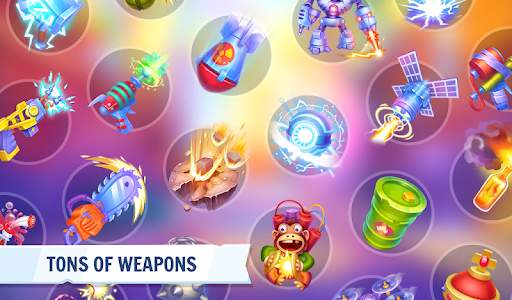
More importantly, that freedom is not contaminated by goal-oriented design. Kick the Buddy: Forever does feature currency, unlocks, collections, and certain task-driven elements, but its core pleasure does not depend on "completing objectives." Of course, you can save up money to buy new weapons and unlock more ways to interact, but what really keeps you playing is not the reward structure. Actually, it is the process itself. When you enter the world of Buddy, you are not trying to prove how skilled you are, nor are you chasing a high rank. You are simply there to enjoy the moment that is happening, including the arc of Buddy flying away, the differences in tactile impact between weapons, the rhythmic coordination of sound and animation, the bizarre compositions that emerge by accident on the screen. The game is remarkably good at turning "moment-by-moment absurdity" into instant joy. There are many scenes in this game that, taken individually, are exaggerated and even ridiculous: a doll-like figure being repeatedly struck by all sorts of props, making comical reactions, accompanied by over-the-top sound effects and exaggerated physics feedback. At its core, it is a theater of absurdity. Yet the impressive part is that the absurdity never remains a cheap gimmick. Instead, it becomes a matter of rhythm. In one seemingly meaningless interaction after another, you gradually develop your own "aesthetic of play." Sometimes you enjoy the beat created by quick, continuous attacks; sometimes you prefer the visual impact of large-area weapons; other times you become absorbed in the minute details of how a certain prop slowly pushes Buddy to the edge while producing specific reaction animations. The pleasure does not come from a single payoff, but from the fact that every second contains feedback.
From the perspective of interaction design, Kick the Buddy: Forever has another frequently overlooked strength, that is, it can actually train concentration. Many people assume that a stress-relief game like this requires no thought at all, that you can just tap randomly and that is enough. But if you play it for a very long time, you realize that you become strangely focused. You start observing the activation rhythm of different weapons, noticing the differences in Buddy's animations under various damage states, distinguishing which tools are better for sustained pressure and which are better for producing chain reactions, and even repeating certain setups just to study one unusual response more clearly. This is not concentration in the conventional sense of "high difficulty," but it is a very specific kind of micro-level attention. You find yourself seriously watching every detail of the feedback on screen, trying to understand the system hidden beneath the exaggerated presentation. That focus is odd precisely because the game itself is so simple, yet you cannot help becoming serious.
That seriousness, in turn, forms an interesting contrast with the game's design of non-attachment. You are serious, but not anxiously serious; you are invested, but not held hostage by winning or losing. Buddy is always there, weapons can always be switched, and it does not matter if the scene gets out of control. The cost of trial and error is almost nonexistent. You do not lose anything from a failed attempt, nor are you punished for missing an opportunity. In a sense, this experience comes close to a state of non-attachment. You do not have to cling desperately to any result, because everything remains under your command. You can start at any moment, stop at any moment, and continue in a different way whenever you like. It is not the system dragging you forward. That sense of control keeps the emotional foundation of the game relaxed. At this point, it becomes necessary to talk about the creative space within Kick the Buddy: Forever. You should not be fooled by how simple its rules are. Precisely because they are simple, they encourage creativity. Complex games often provide standardized solutions, while this kind of casual interaction offers combinations and possibilities. You can naturally begin to experiment. You cannot help but wonder "If I pin Buddy into a certain position with one weapon first and then follow up with an area-of-effect device, will the result become more dramatic?" "If I make use of the map edge, gravity direction, or overlapping explosions, can I create a self-sustaining loop of absurd torment?" While playing, your mind is constantly generating tiny new plans. The game does not require you to become a "creator," yet it continually provokes your creative impulse. You are not just tapping the screen. In fact, you are designing little performances of absurdity.
The simpler it is, the more serious it makes you become. Many complex blockbuster games make players serious through enormous systems and harsh punishments; this game achieves seriousness through clarity of feedback, openness of rules, and a transparent cause-and-effect relationship between input and result. You begin to develop a desire to study what appears at first to be pure nonsense. You wonder whether there is an even more outrageous combination, whether the rhythm of the interaction can be made smoother, why a particular prop feels especially effective in one state but not another. This seriousness is not forced, and it is not something the player artificially projects onto the game. It is naturally induced by the mechanics themselves. Of course, as a game meant for long-term play, Kick the Buddy: Forever is not without flaws. Its depth of content is ultimately limited, and after extended play, the differences between some weapons and their feedback patterns begin to fall into familiar routines. Certain monetization choices and resource-acquisition rhythms can also interfere with the purity of the experience. In a word, what Kick the Buddy: Forever does best is not complexity, it lets you temporarily shed feelings of powerlessness and gain a moment of freedom entirely under your own command. It does not force you to chase goals; it invites you to enjoy the process. It allows every absurd second to generate joy. It trains your focus as you observe Buddy's responses under pressure. It frees you from attachment to victory and defeat because you always hold control. It even awakens creativity in unexpected ways. Most wonderfully of all, it achieves all of this within an extremely simple gameplay framework, and the more you play, the more seriously you begin to treat it!